Amir Neumann · 14 October 2026
Mapping Hosting Shifts to Crawler Access Patterns During Domain Transfers
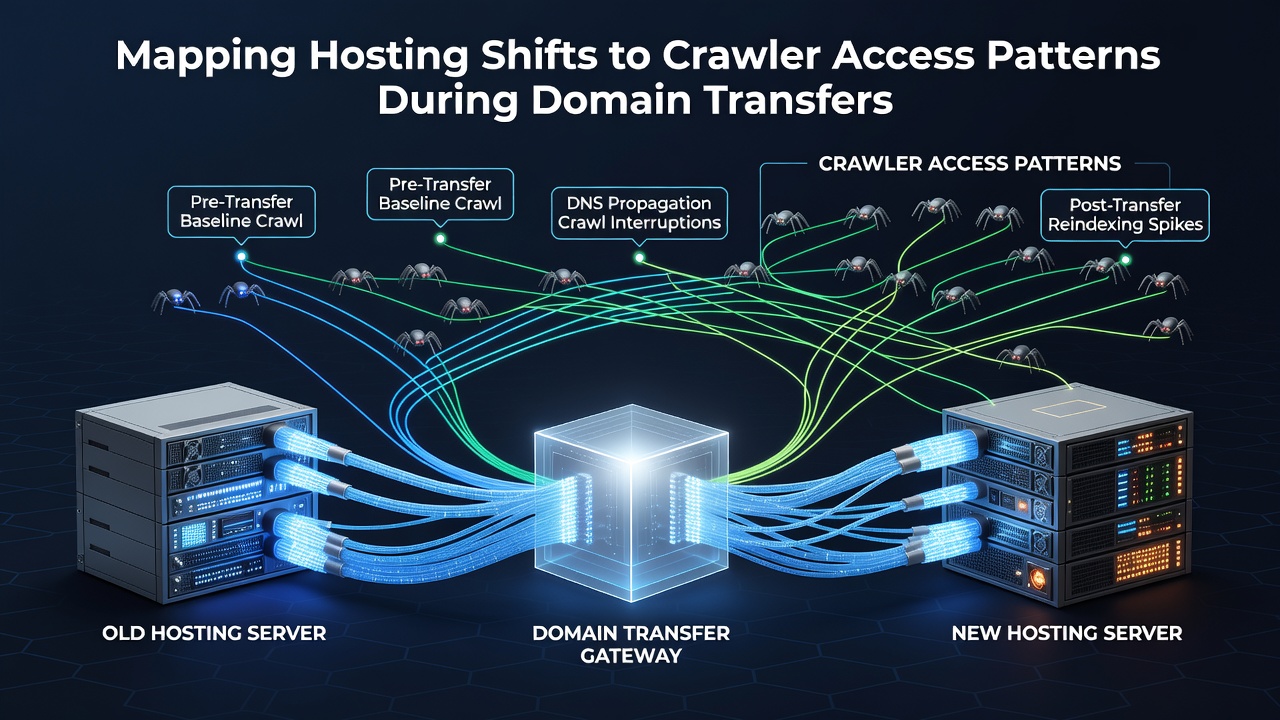
Domain transfers frequently involve simultaneous changes to nameservers, IP addresses, and server configurations, all of which alter the pathways through which automated crawlers reach website content, and data collected from multiple enterprise migrations shows consistent correlations between these infrastructure adjustments and shifts in request frequency, error rates, plus response timing.
Core Mechanics of Hosting Transitions
Registrars complete transfers by updating DNS records at the registry level, after which propagation spreads new nameserver details across global resolvers within hours to several days, while hosting providers simultaneously migrate files and databases to new physical or virtual servers, and observers note that crawlers from major engines begin detecting these modifications through both DNS cache expirations and direct attempts to resolve updated A or AAAA records.
During October 2026, industry monitoring platforms recorded an uptick in transfer activity ahead of scheduled registry policy adjustments, with average propagation windows stretching between 24 and 72 hours depending on TTL values set prior to the move, and researchers tracking these events found that crawlers often continued querying old IP addresses for several additional hours after nameserver changes took effect.
Documented Crawler Response Patterns
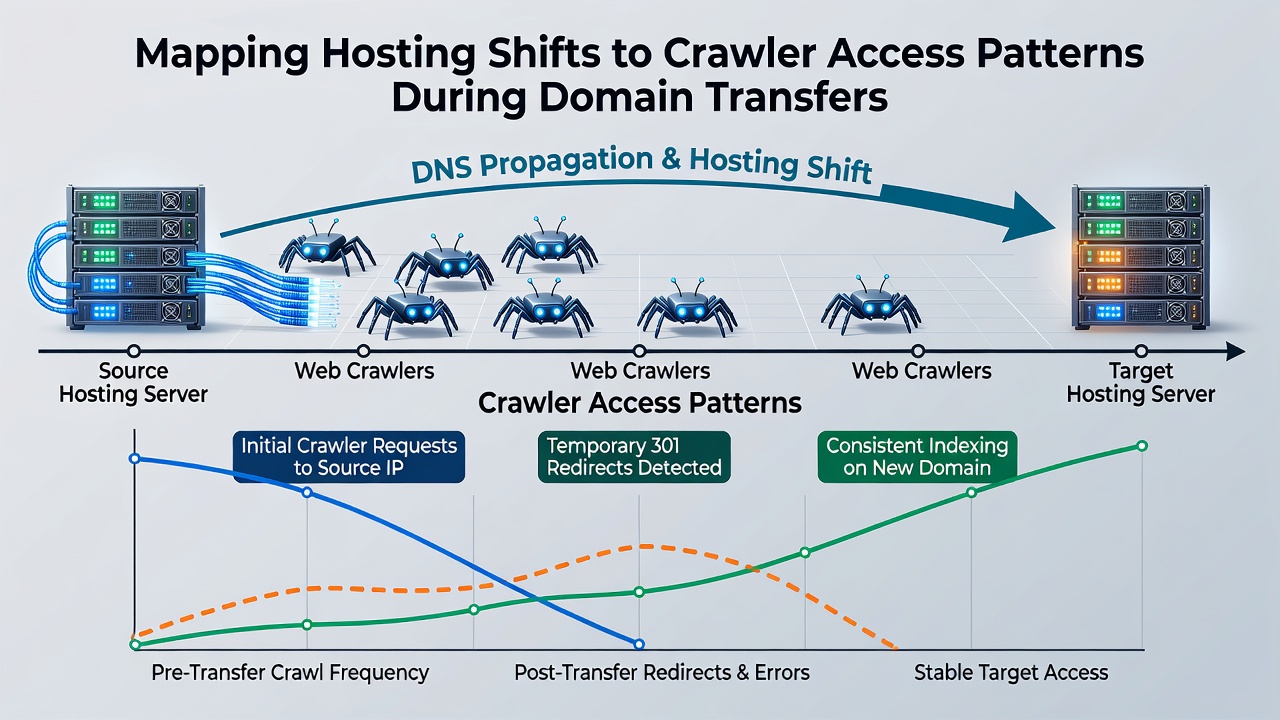
Access logs compiled during controlled transfer tests reveal distinct phases: initial spikes in connection attempts from verification bots shortly after DNS updates, followed by temporary dips in successful fetches when old hosting infrastructure returns NXDOMAIN or connection-refused responses, and gradual resumption of normal crawl volumes once the new environment stabilizes with correct robots.txt and sitemap references.
Studies from academic institutions in the Asia-Pacific region have quantified how certain engines adjust crawl budgets immediately after detecting hosting relocation signals such as changed server headers or certificate authorities, whereas European research groups documented slower recovery times when redirects were absent or misconfigured during the switchover period.
Correlation Between Infrastructure Variables and Access Metrics
Server response variations tied directly to hosting shifts include altered TLS handshake durations, new content delivery network edge locations, plus modified HTTP header orders, and these factors combine to influence whether crawlers classify a site as temporarily unavailable or simply relocated, with quantitative models developed by network analysts demonstrating that even modest increases in latency above 300 milliseconds correlate with reduced revisit rates in the days following migration.
What's interesting is how redirect chains established during transfers affect subsequent crawl behavior, because 301 or 302 responses pointing from old to new addresses typically preserve indexing signals more effectively than meta refresh methods, while data from North American enterprise case logs shows that sites maintaining consistent canonical tags across both environments experienced fewer temporary drops in indexed pages compared with those that omitted such measures.
Practical Monitoring Approaches
Site operators track these patterns through server logs filtered by known crawler user-agent strings, combined with third-party tools that timestamp DNS changes against crawl reports, and analysts at research organizations have recommended establishing baseline metrics for request volume, status code distribution, plus average response size at least two weeks prior to any planned transfer to enable accurate post-migration comparisons.
One study revealed that organizations using synthetic monitoring scripts detected anomalies in crawler behavior up to 48 hours earlier than those relying solely on aggregated search console data, because granular log analysis captured individual failed connection attempts that broader dashboards often smoothed over.
Conclusion
Mapping hosting shifts to crawler access patterns provides measurable indicators that technical teams can use to anticipate and mitigate disruptions during domain transfers, since coordinated changes in DNS, server infrastructure, and response configurations produce predictable sequences of access fluctuations that appear consistently across diverse datasets collected through 2026.