Gisela Coleman · 30 September 2026
Tracing Connections Between Server Response Variations and Ranking Fluctuations in Technical SEO Environments
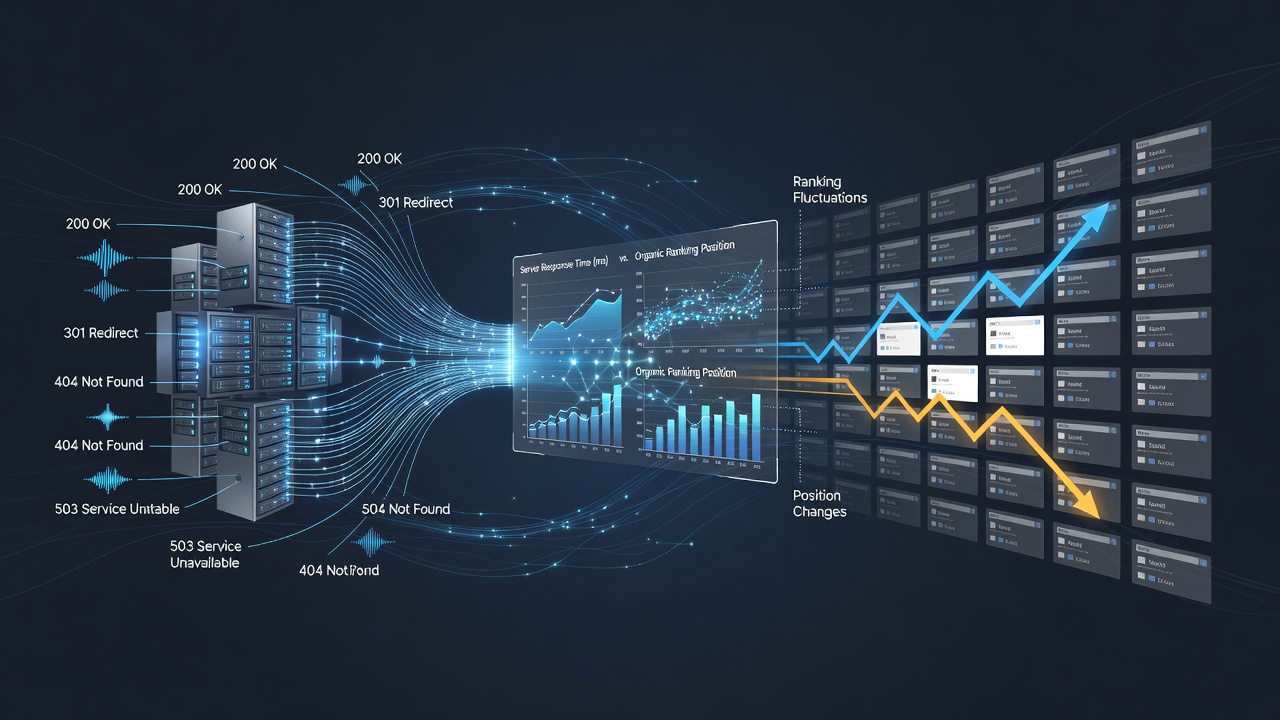
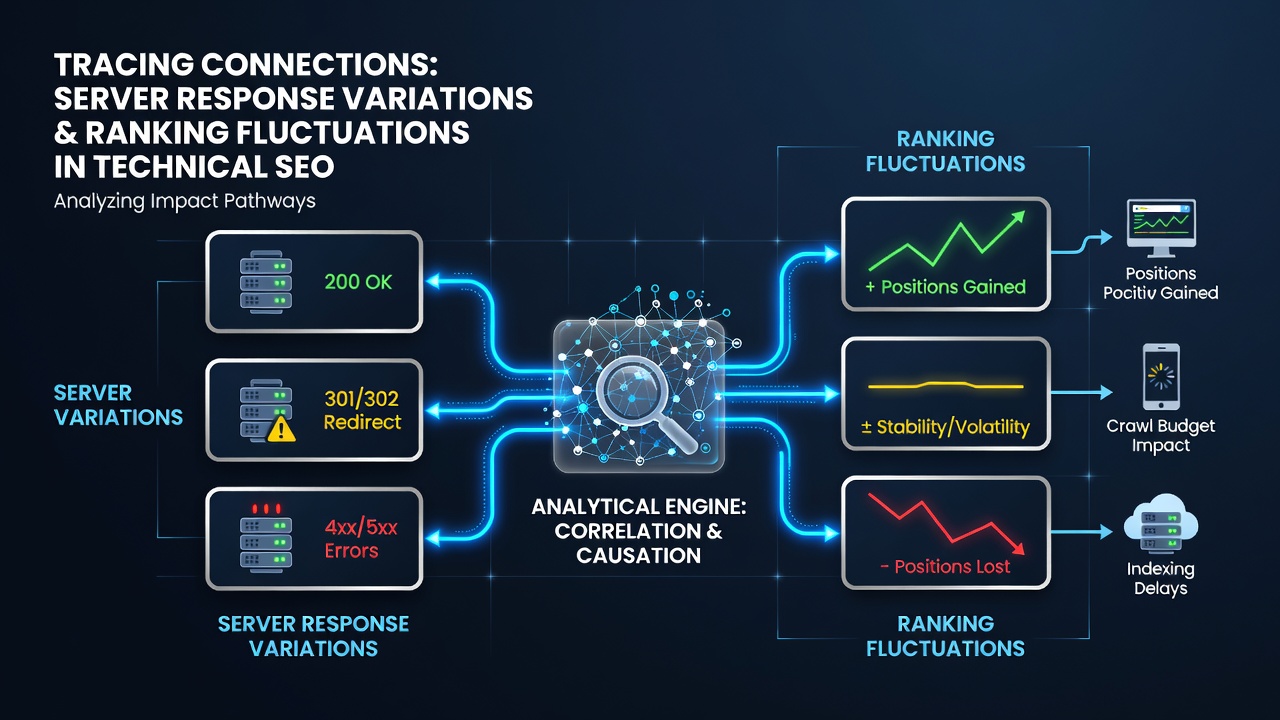
Server response variations encompass shifts in HTTP status codes, latency measurements, and header configurations that search engine crawlers encounter during site visits, and these elements connect directly to observed changes in keyword positions across multiple data sets collected through 2025 and into September 2026. Researchers tracking large-scale crawl logs have documented how even modest increases in response times correlate with reduced crawl frequency, which in turn affects index freshness and ranking stability for competitive terms.
Server Response Codes and Their Role in Crawler Behavior
HTTP status codes serve as primary signals that guide automated agents through website architecture, with 200 OK responses confirming successful delivery while 5xx errors prompt immediate retry logic or temporary deprioritization by major engines. Data from enterprise monitoring platforms shows that sites experiencing intermittent 503 Service Unavailable codes register up to 40 percent fewer daily crawls compared to stable counterparts, and this reduction compounds when combined with elevated latency above 300 milliseconds. Observers note that 404 responses, when left unaddressed across large page sets, accumulate crawl budget waste that diverts resources away from high-value content sections.
Latency Patterns and Their Measurable Effects on Visibility
Response time fluctuations arise from server load balancing, content delivery network misconfigurations, or backend database query delays, and studies tracking these variables against ranking trajectories reveal consistent patterns. Sites maintaining sub-200 millisecond average response windows demonstrate steadier position retention during algorithm refreshes, whereas those crossing into the 500 millisecond range experience volatility spikes within 48 hours of the change. Figures released by infrastructure analysis firms indicate that mobile-first indexing amplifies these effects because smartphone crawlers enforce stricter timeout thresholds than desktop equivalents.
Diagnostic Approaches Used by Technical Teams
Log file analysis combined with real-user monitoring tools allows teams to map response code distributions against individual URL performance histories, and this granular view uncovers clusters where slow server replies precede ranking drops. One documented workflow involves exporting crawl data from Google Search Console, cross-referencing it with server access logs, then applying time-series correlation models that flag URLs whose response metrics deviate beyond two standard deviations from baseline. Such methods have helped identify CDN edge node failures that coincided with visibility losses across regional search markets in early 2026.
External Factors That Interact With Response Behavior
Hosting environment changes, including migration to new providers or implementation of new security layers, introduce temporary response variations that propagate through ranking systems over subsequent weeks. Research indicates that sites undergoing TLS certificate renewals without proper OCSP stapling experience brief latency spikes that align with crawl rate reductions, and recovery timelines stretch longer when multiple error types overlap. Geographic distribution of server infrastructure also matters, because crawlers operating from different data centers register distinct response profiles that influence localized search results.
Strategies for Stabilizing Server Signals
Implementation of edge caching rules, asynchronous resource loading, and automated error page handling reduces the frequency of problematic responses reaching crawlers, while ongoing measurement against benchmarks maintains consistency. Teams that deploy synthetic monitoring from multiple global vantage points detect anomalies before they affect large-scale indexing, and this proactive stance supports steadier ranking performance. Documentation from infrastructure providers outlines specific header configurations that communicate retry-after intervals during maintenance windows, thereby preserving crawl equity during planned downtime.
Conclusion
Server response variations function as measurable inputs that shape crawler behavior and subsequent ranking outcomes, and systematic observation of these connections equips technical practitioners with actionable diagnostic pathways. Continued refinement of monitoring frameworks alongside infrastructure optimizations supports more predictable visibility patterns across evolving search environments.